Kava 101
What Is Kava? The Complete Guide to the Root, Its History, and Kava Pouches
If you have heard the word kava lately, you are not alone. Kava bars are opening in cities across the country, and more people are looking for ways to slow down that do not revolve around a drink in their hand. But kava is not new. It is one of the oldest social traditions in the Pacific, and it has a story worth knowing before you try it.
This guide covers everything a beginner should understand. You will learn what kava is, where it grows, and how it was traditionally prepared and shared. You will also learn what noble kava means, what people report feeling, how to use it responsibly, and why kava now comes in a simple pouch. If you want the short version, our What Is Kava page has the highlights. If you want the full picture, keep reading.
What is kava?
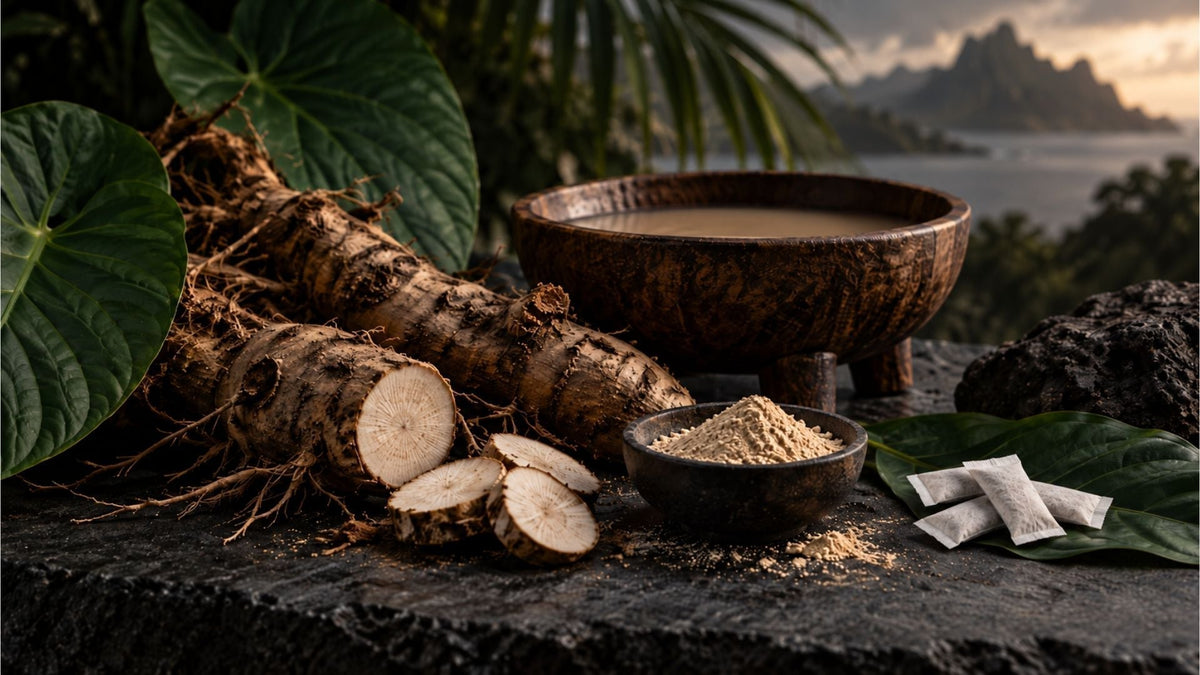
Kava is a plant. Its scientific name is Piper methysticum, and it belongs to the pepper family, the same broad family as black pepper. The part people use is the root. For centuries, communities across the South Pacific have dried, ground, and prepared kava root as a drink.
The word kava is also used for the drink itself. In Fiji, you will hear it called yaqona or grog. In Hawaii, it is called ʻawa. In Vanuatu, Tonga, and Samoa, it has its own names and customs. Whatever it is called, the core idea is the same: kava is a root that brings people together at the end of the day.
The compounds inside kava
The root contains a group of natural compounds called kavalactones. Kavalactones are the reason kava has been valued for so long. Different kava plants carry different mixes of these compounds, which is one reason growers and regulators pay close attention to which variety is being sold. More on that in the section on noble kava below.

Where does kava come from?
Kava grows in warm, humid island climates. The best known growing regions include:
- Vanuatu, often considered the historic home of kava, with dozens of named varieties.
- Fiji, where kava is part of daily social life and formal ceremonies.
- Tonga and Samoa, where kava plays a central role in important gatherings.
- Hawaii, where ʻawa has deep cultural roots.
Kava is a slow crop. Plants are typically grown for several years before the roots are harvested, which is part of why quality kava is valued the way it is. The root is cleaned, dried, and ground before it is ever prepared.
The kava ceremony: a tradition built on sharing
To understand kava, it helps to understand how it has traditionally been used. Kava is rarely something a person drinks alone in a hurry. It is shared.
In a traditional setting, the ground root is mixed with water and kneaded through a cloth into a large wooden bowl, often called a tanoa in Fiji. A host serves the drink in a coconut shell cup, one person at a time. Each person drinks, the cup comes back, and the conversation continues. Kava sessions can welcome guests, mark important moments, settle disagreements, or simply close out an ordinary evening among friends.
That sense of ritual is the part of kava we care about most at Rooted. Not the ceremony itself, which belongs to the cultures that created it, but the idea behind it: a deliberate pause that tells you one part of the day is ending and another is beginning. It is the same idea behind our tagline, Stay Rooted.
What is noble kava?
Not all kava is the same. Kava plants are grouped into varieties, called cultivars, and they are not interchangeable. Traditionally, people in the Pacific have distinguished between kava that is suited to regular, everyday use and kava that is not.
Noble kava is the name for the cultivars with the longest record of traditional everyday use. They are the varieties communities have chosen for generations. Other types, sometimes called tudei or two-day kava, have a different profile and are generally not considered suitable for regular use.
Vanuatu takes this so seriously that it regulates kava exports under national law, with rules designed to keep non-noble varieties out of the export market. For anyone buying kava, the lesson is simple: the variety matters, and you should know what you are getting.
Rooted uses noble kava root only. It is the same category of kava people have shared for generations, and every dose is printed on the tin. You can see the full label for each formula on our Focus and Unwind pages.
What does kava feel like?
Everyone responds a little differently, so it is better to talk about what people commonly report than to make promises. The most recognizable thing about kava is physical: a light tingle or mild numbness in the mouth where it touches. That is completely normal, and many people consider it the signature of real kava.
Beyond that, people who use kava often describe the experience as calm, social, and clear-headed rather than foggy. Traditionally, that is why it has been paired with conversation instead of replacing it.
Because experiences vary, the best approach is to start small, pay attention to how you feel, and try it for the first time somewhere comfortable, like at home. Our guide to using kava pouches walks through exactly how to do that.
Kava vs. kratom: not the same thing
This is one of the most common points of confusion, so it is worth being clear. Kava and kratom are two completely unrelated plants.
- Kava is the root of Piper methysticum, a pepper family plant from the South Pacific.
- Kratom comes from the leaves of a different tree that grows in Southeast Asia.
They come from different regions, different plant families, and different traditions. Rooted is made with noble kava root only. There is no kratom in any Rooted product. You can find more answers like this one on our FAQ page.
Is kava safe? What to know before you try it
Kava has been used for a very long time, but that does not mean it is right for everyone. Being straightforward about this is part of doing things properly.
In the early 2000s, the U.S. Food and Drug Administration issued a consumer advisory about rare reports of liver injury associated with kava products. Research and debate since then have looked closely at the variety of kava used, which part of the plant was included, and how products were made. That is one reason the noble kava distinction matters so much.
Here are the common-sense guidelines we follow and recommend:
- Adults only. Rooted is for people 18 and over.
- Skip it if you are pregnant or nursing.
- Skip it if you have or have had liver problems, or take medications that affect the liver.
- Talk to your doctor first if you have a medical condition or take prescription medication.
- Do not combine kava with alcohol.
- Do not drive or operate machinery until you know how kava affects you.
- Keep it out of reach of children.
If you have questions about whether kava is right for you, your doctor is the best person to ask. For product questions, you can always reach our team directly.
From the bowl to the pouch
The traditional kava bowl is beautiful. It is also built for an evening gathering, not a Tuesday afternoon at your desk. Preparing kava the traditional way takes time, a lot of liquid, and a willingness to drink something most people describe as earthy at best.
A pouch changes the format without changing the root. You place it between your gum and upper lip, and it sits there quietly. There is no mixing, no bowl, and no bitter cup. Because the pouch sits against the inside of your mouth, the kava is absorbed through your gum and cheek rather than waiting on digestion. That is why many people notice it within minutes.
That is the whole idea behind Rooted: keep the ritual, lose the ceremony. A tin fits in your pocket, each one holds 15 pouches, and there is nothing to prepare.
Two formulas, one root
Every Rooted pouch starts with noble kava. What changes is what we pair it with and when you reach for it.
Focus: for the working hours
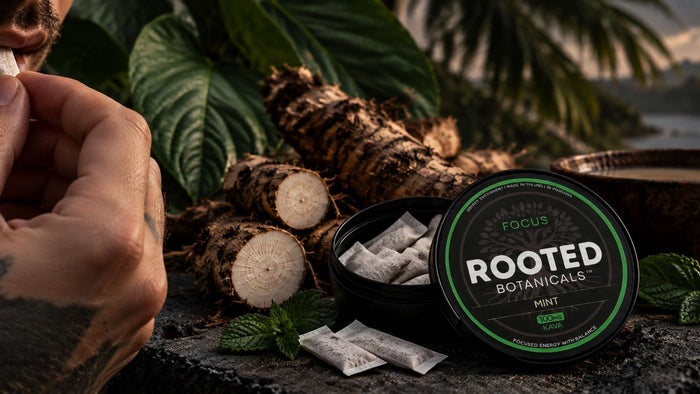
Rooted Focus pairs 100mg of kava with 40mg of caffeine, 35mg of Cognizin® citicoline, and 35mg of L-Theanine. It is built for the part of the day when you need to show up: deep work, long meetings, and the afternoon stretch that usually drags. The caffeine is intentionally moderate, well below a typical cup of coffee.
Unwind: for the evening
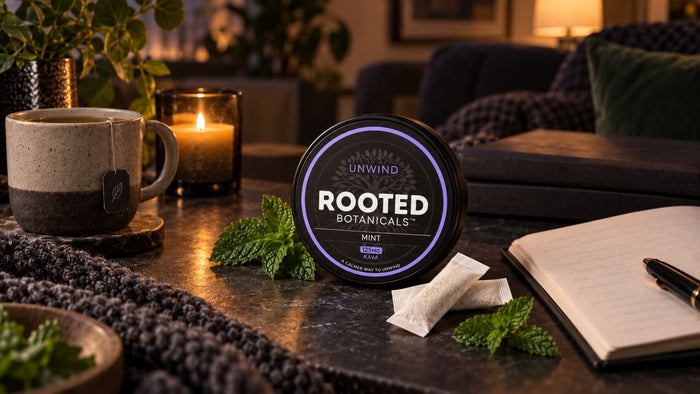
Rooted Unwind pairs 125mg of kava with 40mg of ashwagandha, 30mg of L-Theanine, and 25mg of theobromine, a compound found naturally in cacao. There is no caffeine. It is built for the slow fade into evening, when work is done and you want the night to feel like yours. If that is the ritual you are looking for, our guide to building an alcohol-free evening ritual is a good next read.
Can't decide? Take both
A lot of people start with one formula and come back for the other. The Day + Night combo includes one tin of each at a better price than buying them separately. Subscribe and it arrives before you run out, and you can skip, pause, or cancel anytime from your account.
How to choose a quality kava product
Whether you choose Rooted or not, here is what to look for in any kava product:
- Noble kava only. The label or brand should say so plainly.
- Every dose listed. Avoid products that hide ingredients behind a proprietary blend. You should know exactly how much kava is in each serving.
- Root, not the rest of the plant. Traditional use centers on the root.
- Third-party testing. Independent testing adds a layer of accountability.
- Clear warnings. A responsible brand tells you who should not use the product.
Those are the standards we hold ourselves to. It is why the full supplement facts are printed on every Rooted tin, with no proprietary blends.
How kava is traditionally prepared
Traditional preparation is simple, but it takes patience. While methods differ from island to island, most follow the same basic steps:
- Harvest and dry the root. After several years of growth, the roots are dug up, cleaned, and dried.
- Grind it. The dried root is pounded or ground into a fine powder.
- Strain it with water. The powder goes into a cloth bag, which is soaked and kneaded in a bowl of water until the liquid turns a muddy brown.
- Serve it by the cup. The host scoops the drink into a coconut shell cup and serves each person in turn.
The whole process can take a while, and that is part of the point. Preparing kava is itself a slow, social act. A pouch skips the preparation, but we think it is worth knowing where the ritual comes from.
Kava beyond the Pacific
European explorers began writing about kava in the late 1700s, describing the drink and the ceremonies around it. For a long time afterward, kava stayed mostly within Pacific communities and the families who carried the tradition to new countries.
That has changed. Today, kava bars can be found in cities across the United States, often as relaxed, alcohol-free places to meet up in the evening. At the same time, more people are exploring new formats like capsules, powders, and pouches that bring kava into daily life without a bowl.
The growth has brought a lot of new products, and not all of them are made with the same care. That is why knowing the difference between noble and non-noble kava, and choosing brands that list every dose, matters more now than ever.
A quick glossary of kava terms
- Kava: the root of Piper methysticum, and the drink made from it.
- Kavalactones: the natural compounds found in kava root.
- Noble kava: the cultivars with the longest record of traditional everyday use.
- Tudei kava: a group of varieties generally not considered suited for regular use.
- Tanoa: the large wooden bowl kava is traditionally prepared in, especially in Fiji.
- Bilo: the coconut shell cup kava is served in.
- Grog: an informal Fijian word for kava.
- ʻAwa: the Hawaiian name for kava.
- Bula: a Fijian greeting often heard in kava circles.
How to read a kava product label
Labels can be confusing, especially with a new ingredient. Here is what to look at on any kava product, including ours:
- The kava amount per serving. It should be a clear number in milligrams, not hidden inside a blend.
- The source. Look for noble kava root specifically.
- The other actives. Every added ingredient should have its own listed amount.
- Serving size and servings per container. For Rooted, one serving is one pouch, and every tin holds 15.
- Warnings. A clear list of who should not use the product is a sign the brand takes safety seriously.
If a label leaves you guessing, that is a signal to keep looking.
Frequently asked questions about kava
Is kava legal in the United States?
Yes. Kava is sold legally in the United States, most often as a dietary supplement. Rules can differ in other countries, so check local regulations if you travel.
Does kava contain nicotine or caffeine?
Kava itself contains neither. Rooted pouches contain no nicotine. Focus includes a moderate dose of added caffeine, while Unwind is caffeine-free.
How quickly do people notice kava?
With a pouch, many people notice the tingle within a few minutes. Rooted pouches are strongest in the first 15 minutes and deliver for up to 45.
Can I use kava every day?
Many people build kava into a daily routine. Everyone is different, so pay attention to how you feel, follow the warnings on the tin, and talk to your doctor if you have any health concerns.
Where can I buy kava pouches?
You can shop every Rooted formula on our Shop All page. If you run a shop and want to carry Rooted, visit our wholesale page.
The bottom line
Kava is a root with centuries of tradition behind it, built around a simple idea: slowing down and marking the moments that matter. Noble kava is the variety with the longest record of everyday use, and it is the only kava Rooted uses. A pouch keeps that ritual and removes the preparation, so it fits into a real day.
If you are ready to try it, start with the formula that matches your day. Focus for the working hours, Unwind for the evening, or the Day + Night combo for both.
These statements have not been evaluated by the Food and Drug Administration. This product is not intended to diagnose, treat, cure, or prevent any disease. For adults 18 and over.